
Benefits of On-Site First Aid Training for Multi-Site Businesses
Benefits of On-Site First Aid Training for Multi-Site Businesses
Managing first aid training is relatively straightforward when every employee works in one building. The challenge becomes greater when a business operates offices, branches, warehouses, depots, shops or facilities across several locations. Each site needs suitable first aid arrangements, yet the organisation also needs consistency, manageable records and a training programme that does not create unnecessary operational disruption.
For Irish multi-site employers, on-site first aid training can provide a practical solution. Instead of sending employees individually to public courses, training can be organised for groups at company premises. Courses can be planned around staffing requirements and delivered to teams who work together in the environment where their emergency procedures will actually be used.
This approach can support compliance, simplify coordination and help businesses build a more consistent standard of workplace emergency preparedness across Dublin and throughout Ireland.
1. Create a Consistent First Aid Standard Across Locations
Multi-site businesses often develop local working practices over time. One branch may have several trained responders and well-maintained equipment, while another relies on one employee whose qualification is approaching renewal. Without central oversight, these differences can remain unnoticed.
A planned on-site training programme gives the organisation an opportunity to establish a consistent approach. Managers can define how responder training is organised, how records are maintained and how renewal dates are monitored while still allowing each site to address its own risks.
Consistency does not mean every location needs identical arrangements. A small office and a busy warehouse may require different levels of cover. The benefit is that both can operate within the same organisational framework for assessing and managing first aid.
2. Reduce Employee Travel
Sending employees to external public courses can involve more than the training time itself. Staff may need to travel across Dublin or from another county, arrange parking and spend additional working hours away from their normal location.
When a trainer comes to the workplace, much of this travel can be removed. Employees arrive at their normal place of work and participate in the course there. For organisations training several people, the cumulative time saving can be significant.
This can be particularly useful for businesses outside major urban centres or for locations where public transport options are limited. It also simplifies the logistics for employees who would otherwise need to coordinate separate journeys.
3. Make Scheduling Easier for Managers
Training one employee at a time can create an ongoing administrative burden. Managers need to search for suitable dates, make bookings, coordinate travel and track certificates from different course sessions.
Group training allows several nominated employees to be scheduled together. The organisation can choose dates that fit operational requirements and plan staffing cover in advance.
For multi-site employers, courses can be organised location by location or around regional clusters. This creates a more structured programme rather than reacting individually whenever a certificate approaches expiry.
4. Train Colleagues Together
There is practical value in employees learning alongside the people they work with. During a real emergency, responders may need to cooperate, communicate and divide tasks quickly.
Group training allows colleagues to practise skills in the same session and discuss how responsibilities might work within their own team. One person may provide first aid while another contacts emergency services or retrieves an AED.
Shared learning can also improve confidence. Employees leave the course knowing which colleagues have received the same training and understanding how they can support one another during an incident.
5. Relate Training to the Workplace
On-site delivery places training within the environment where employees work. Although course content follows the relevant training standard, discussions can naturally relate to practical workplace arrangements.
Participants can consider where first aid kits are located, how an AED would be retrieved and which entrance emergency services would use. These details can expose gaps that may not be obvious when employees attend training away from their workplace.
A warehouse team may discuss access across a large facility, while office employees may consider lift access, reception procedures or hybrid working patterns. The physical setting gives emergency planning useful context.
6. Support Different Risk Profiles Across Sites
Multi-site businesses frequently operate locations with different functions. A head office may mainly involve desk-based work, while another site contains vehicles, loading operations, machinery or manual handling activities.
Each location should assess its own first aid needs rather than assuming that one arrangement automatically suits the entire company. Workforce numbers, hazards, shift patterns, visitors and distance from emergency medical services can all vary.
On-site training can form part of a broader programme in which each site identifies suitable employees for responder training while the organisation maintains central standards and oversight.
7. Improve Responder Coverage
A central list showing that a company has many trained responders can be misleading if most of them work at the same location. Effective first aid planning needs to consider where employees are physically based and when they are present.
Multi-site employers should review responder coverage for each location, including shifts, holidays and hybrid working. Training additional employees where gaps exist helps create more dependable coverage.
On-site group courses can make it easier to address these gaps efficiently. Rather than filling individual places on unrelated external courses, a business can train a group selected specifically to improve coverage at a particular site.
8. Simplify Refresher Training
First aid qualifications require ongoing management. When employees are trained at different times through multiple providers, renewal dates can become scattered throughout the year.
A coordinated programme allows businesses to group renewals more effectively. Managers can maintain a central register showing training dates, locations and upcoming refresher requirements.
Over time, this can create a predictable training cycle. Instead of discovering an expired qualification unexpectedly, the organisation can plan future on-site sessions well in advance.
9. Improve Training Records
Multi-site organisations benefit from clear central records combined with local visibility. Head office or health and safety management may maintain the master register while site managers know which responders are available locally.
Records should identify the employee, training completed, date, renewal requirement and normal work location. Where staff transfer between sites, the register should be updated so that responder coverage remains accurate.
Good records make it easier to review first aid arrangements and demonstrate that training is being actively managed rather than treated as a one-off exercise.
10. Support New Site Openings
Opening a new branch, depot or office creates a natural opportunity to establish first aid arrangements correctly from the start. Employers can assess the new location, nominate suitable responders and arrange training before or shortly after operations begin.
On-site training can be incorporated into the wider launch or induction programme. Employees learn together and can be briefed on equipment locations and emergency procedures specific to the new premises.
This is generally more effective than allowing a new site to operate for months before first aid responsibilities are reviewed.
11. Strengthen Emergency Communication
First aid training can highlight communication issues that affect emergency response. Employees need to know how to contact a responder, who calls emergency services and how an ambulance reaches the casualty.
Different sites may have different access arrangements. One location may have a staffed reception, while another has security gates or several warehouse entrances. Local procedures should reflect these differences.
Training groups at each site creates an opportunity to reinforce the local procedure while maintaining common organisational expectations about emergency response.
12. Make Better Use of AEDs and First Aid Equipment
Many businesses invest in AEDs and first aid supplies but give less attention to how employees will access them during an emergency. Multi-site employers need to know what equipment is available at each location and who is responsible for checking it.
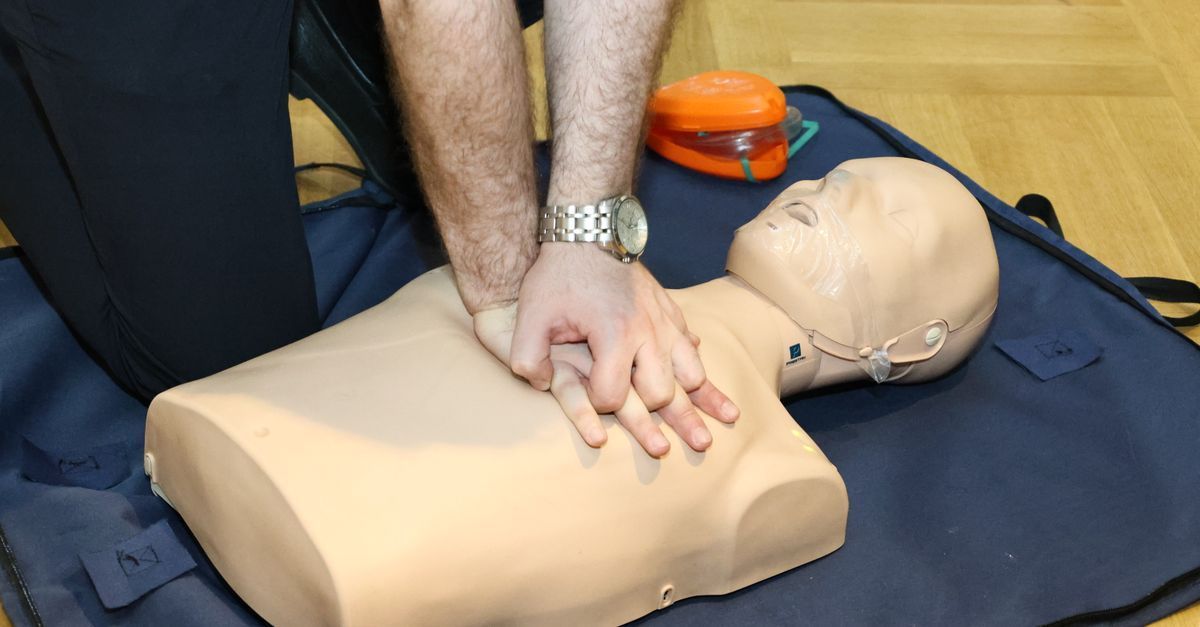
First Aid Responder training gives nominated employees practical experience with CPR and AED use. This can reduce hesitation and help staff understand how the device fits into the wider emergency response.
Local equipment checks should be assigned clearly, while central health and safety management can set the overall standard for inspection and record keeping.
13. Reduce Administrative Fragmentation
When each site independently books training, an organisation can end up with multiple providers, different booking processes and inconsistent record formats. This can make central oversight more difficult.
A coordinated training relationship can simplify administration. The organisation can plan requirements across locations, organise group sessions and maintain clearer records of what has been delivered.
This is particularly valuable for businesses expanding across Ireland. A scalable process established early can make future locations easier to integrate.
14. Support a Company-Wide Safety Culture
Employees notice when health and safety is managed consistently. Providing structured first aid training across locations demonstrates that emergency preparedness is an organisational priority rather than something left entirely to individual branches.
Trained responders can become visible safety contacts within local teams. They may identify practical improvements, remind colleagues about equipment or raise concerns when working arrangements change.
When managers respond to this feedback and maintain training over time, first aid becomes part of the organisation's wider safety culture rather than an isolated compliance task.
15. Review Coverage as the Business Grows
Multi-site businesses rarely remain static. Employee numbers increase, branches relocate and new sites open. First aid arrangements should be reviewed alongside these changes.
A location that originally employed ten people may later have fifty. Another site may introduce a night shift or expand into an additional building. Each change can affect the number and distribution of trained responders required.
Regular review, supported by central training records, allows the organisation to identify gaps and schedule future on-site courses before those gaps become operational problems.
Conclusion
On-site first aid training offers multi-site businesses a practical way to coordinate responder training across locations while reducing travel and administrative complexity. It allows colleagues to train together, supports more consistent standards and makes it easier to relate emergency planning to each workplace.
The strongest approach combines central oversight with local assessment. Each site should consider its own workforce, risks, working hours and layout, while the wider organisation maintains clear records and a structured renewal programme.
Handle with Care provides on-site workplace first aid training for businesses throughout Dublin and across Ireland. If your organisation operates multiple offices, branches, warehouses or facilities, contact Handle with Care to discuss a coordinated group training programme for your teams.