
First Aid Training for Healthcare and Social Care Organisations
First Aid Training for Healthcare and Social Care Organisations
Healthcare and social care workplaces are built around looking after people, but that does not remove the need for robust workplace first aid arrangements. Staff can become ill, visitors can suffer medical emergencies and employees may encounter injuries while carrying out physically demanding work. For Irish employers, suitable first aid provision should therefore sit alongside wider health and safety planning rather than being treated as an afterthought.
Hospitals, clinics, nursing homes, residential care settings, disability services, community organisations and other care providers can all have very different working environments. Some operate around the clock, some have multiple buildings or locations, and many employ teams with different clinical and non-clinical responsibilities. These factors make it important to assess first aid needs according to the actual workplace.
Well-planned First Aid Responder training helps organisations develop reliable cover, practical emergency skills and greater confidence among staff. When delivered on site to groups of employees, training can also be discussed in the context of the premises and the situations staff are most likely to encounter.
1. Why First Aid Still Matters in Healthcare Settings
It can be tempting to assume that a healthcare workplace automatically has emergency care covered because medically trained personnel are present. In practice, workplace first aid arrangements need to consider who is available, where they work and whether they can respond promptly to an incident involving an employee, contractor or visitor.
A large organisation may have clinical teams in one area and administrative, maintenance, catering or support staff elsewhere. Smaller social care organisations may have no doctor or nurse continuously present. First aid planning should reflect these realities rather than relying on job titles alone.
Training designated employees provides a clear layer of workplace emergency preparedness. It helps ensure there are people who understand how to assess a casualty, summon appropriate assistance and provide immediate first aid while further medical help is arranged.
2. Assess the Risks in the Actual Workplace
First aid requirements should be informed by the organisation's risk assessment. Healthcare and social care environments can involve manual handling, slips and falls, sharps, cleaning chemicals, kitchens, maintenance activities, challenging behaviour and movement between different parts of a site.
The needs of an office-based healthcare administration team will differ from those of employees working in a residential care home. Similarly, a community service whose staff regularly travel or work away from a central base may need to consider first aid arrangements beyond the main premises.
Employers should look at workforce numbers, shift patterns, the nature of work, previous incidents, workplace layout and access to emergency medical services. This provides a stronger basis for deciding how many employees should be trained and where they should be located.
3. Plan First Aid Cover Across Shifts
Many healthcare and social care organisations operate outside standard office hours. A first aid arrangement that appears adequate when the full daytime team is present may become much weaker during evenings, nights, weekends or public holidays.
Managers should review rotas to establish whether trained responders are genuinely available throughout relevant operating hours. Annual leave, sickness, training days and staff turnover should also be considered. Relying on one person can create an obvious gap as soon as that employee is absent.
Training several suitable employees across departments or shifts can provide greater resilience. For multi-floor or dispersed premises, the physical location of responders also matters because rapid access can be important during a serious emergency.
4. Give Non-Clinical Staff Appropriate Skills
Healthcare organisations employ many people whose roles are not clinical. Receptionists, administrators, porters, catering teams, facilities staff, cleaners and managers may all be present when an incident occurs. In some workplaces, these employees may be closer to the casualty than a clinical colleague.
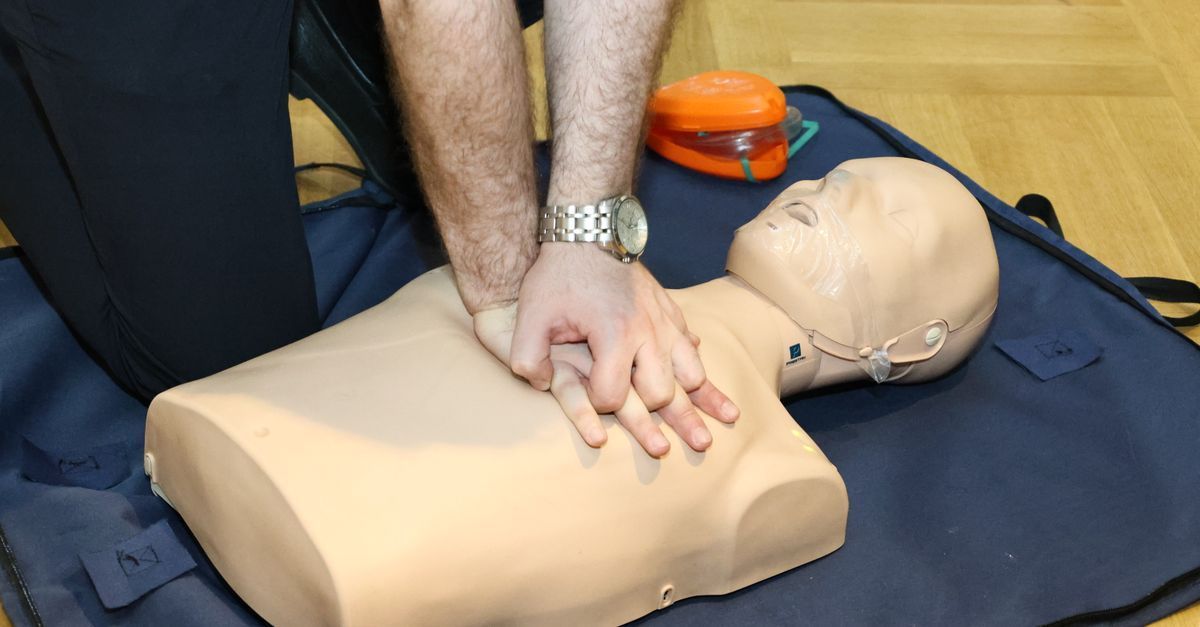
First Aid Responder training can give nominated staff a structured approach to common emergencies. Practical learning typically builds confidence around casualty assessment, CPR, AED use and immediate first aid measures while professional medical assistance is being obtained.
This does not turn non-clinical staff into healthcare professionals. Instead, it provides clearly defined emergency skills appropriate to the responder role and helps the organisation avoid assuming that someone else will always be available.
5. Consider Employees as Well as Service Users
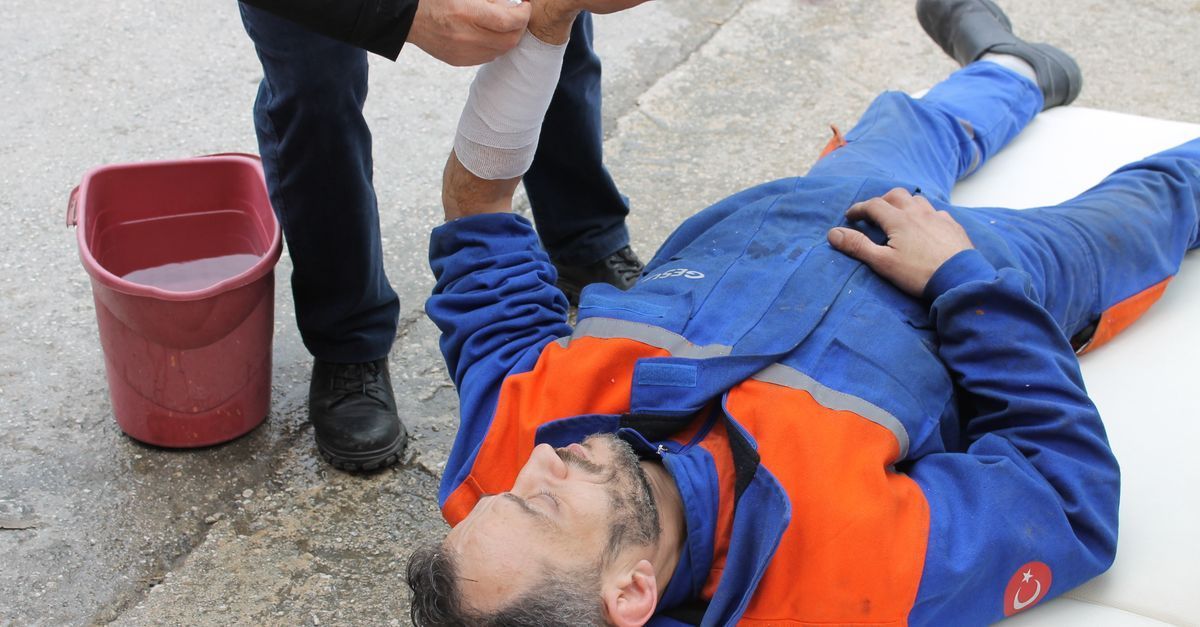
Care organisations naturally focus heavily on patients, residents and service users. Workplace health and safety planning must also consider employees. A staff member may suffer a fall, cut, burn, cardiac emergency or sudden illness during a shift.
Contractors and visitors may also require assistance. A maintenance contractor could be injured in a plant room, while a family member visiting a residential facility could become suddenly unwell. First aid arrangements should be practical enough to respond to the range of people who may reasonably be present.
Clear procedures help employees understand who to contact and where first aid equipment is located. This is particularly important in large buildings where different teams may have limited day-to-day contact with one another.
6. Include CPR and AED Preparedness
Cardiac emergencies demand a rapid, organised response. Where an AED is available, employees should know its location and be able to retrieve it quickly. Training responders in CPR and AED use helps turn the device from a piece of equipment on the wall into part of a functioning emergency response.
Organisations should consider accessibility as well as availability. An AED located behind a locked door or in a part of the building inaccessible during night shifts can create avoidable delays. Staff communication and signage should support rapid retrieval.
Responsibility for routine device checks should also be assigned. Manufacturers' guidance should be followed so that pads, batteries and the unit itself remain ready for use.
7. Maintain Suitable First Aid Equipment
First aid kits should be located where they can be reached without unnecessary delay. Larger facilities may require several first aid points, particularly where buildings have multiple floors, wings or separate work areas.
Supplies need routine inspection. Items are used, packaging becomes damaged and stock can gradually disappear if nobody has responsibility for checking it. Assigning a named person or role makes maintenance more reliable.
Employees should know where equipment is kept. Including this information in induction and workplace safety communication helps new staff understand the arrangements from the beginning.
8. Keep Training Records and Renewal Dates Organised
Training is not a one-time administrative exercise. Organisations should maintain clear records showing who has completed training and when renewal is due. This becomes especially important for employers with large teams, high staff turnover or several sites.
A central register can help managers identify upcoming renewals and potential gaps. Planning refresher training in advance is far easier than discovering that several responders need renewal at the same time.
Records can also support wider health and safety management by showing how responder cover is distributed across departments and shifts.
9. Use On-Site Group Training to Reduce Disruption
Releasing individual employees to attend public courses can be difficult in healthcare and social care environments where staffing levels must be carefully maintained. On-site group training offers an alternative by bringing the instructor to the organisation.
Teams can be scheduled together and the course can take place in a suitable training room at the workplace. This can reduce travel and make coordination easier for managers responsible for several employees.
There is also practical value in learning alongside colleagues. Participants can discuss how emergency procedures relate to their own premises, where equipment is located and how assistance would be summoned in their working environment.
10. Review Arrangements When Services Change
Healthcare and social care organisations evolve. New services open, buildings are extended, staffing levels change and employees move between departments. First aid arrangements should be reviewed when significant operational changes occur.
A system designed for one small location may no longer be adequate after an organisation expands to several sites. Likewise, changes to shift patterns can alter when trained responders are available.
Including first aid in periodic health and safety reviews helps keep provision aligned with the organisation as it grows. The aim is practical readiness, not simply maintaining historic arrangements because they once appeared sufficient.
11. Build a Clear Emergency Procedure
First aid responders operate most effectively when the wider organisation knows what to do. Employees should understand how to call for a responder, how emergency services are contacted and how an ambulance would gain access to the correct part of the premises.
Large facilities may need a person to meet emergency services and guide them to the casualty. Security doors, coded entrances and multiple buildings should be considered before an emergency exposes access problems.
Simple, clearly communicated procedures can prevent confusion. They also allow trained responders to focus on the casualty while colleagues manage calls, access and the surrounding area.
12. Make First Aid Part of the Safety Culture
Effective first aid provision is strongest when it is integrated into everyday safety management. Training, equipment checks, incident reviews and communication should reinforce one another rather than operating as separate tasks.
Managers can encourage responders to raise practical concerns after training or incidents. A responder may notice that equipment is difficult to access or that colleagues are unclear about emergency procedures. Acting on this feedback can improve the whole system.
For healthcare and social care employers, this approach supports both staff welfare and organisational preparedness. It demonstrates that caring for people includes ensuring employees have the skills and resources to respond when unexpected emergencies occur.
Conclusion
Healthcare and social care organisations need first aid arrangements that reflect their own workforce, premises, risks and operating hours. Clinical expertise within an organisation does not remove the value of clearly designated responders, accessible equipment, organised records and dependable emergency procedures.
Regular review is particularly important for services operating shifts or across multiple locations. Training enough suitable employees and planning for absences helps maintain meaningful cover rather than relying on assumptions about who might be available.
Handle with Care provides professional workplace first aid training for organisations throughout Dublin and across Ireland. Our on-site group training approach can help healthcare and social care employers train teams at their own premises while reducing unnecessary travel and disruption. Contact Handle with Care to discuss First Aid Responder training for your organisation.