Where to Place and How to Maintain Your Workplace AED
Buying an AED for the workplace is often treated as the finish line, when really it's only the start. An AED that's badly positioned, poorly maintained, or sitting in a cupboard nobody can find in an emergency is of little use when seconds genuinely matter. Where you place it and how you look after it afterwards matter just as much as the decision to buy one in the first place.
In this guide, we'll walk through where an AED should actually go in an Irish workplace, how often it needs checking, and how this ties in with the trained staff who'll actually use it when something goes wrong. Do you know exactly where your workplace AED is right now, and whether anyone has checked it recently?
1. Choosing a Location That Actually Works in an Emergency
An AED needs to be reachable within roughly three minutes from anywhere in the building, since survival rates drop sharply for every minute that passes without defibrillation after a cardiac arrest. In practice, that usually means a central, well-trafficked location rather than a quiet back office or a locked storeroom that only one or two people have access to.
Reception areas, near lifts, canteens and main corridors tend to work well, since they're places staff and visitors pass through constantly and can point to in an emergency without hesitation. For larger premises or multi-floor buildings, a single AED at the front desk often isn't enough. It's worth mapping out worst-case response times from the furthest corners of the building rather than assuming one unit covers everywhere.
2. Signage and Accessibility Matter More Than You'd Think
An AED that's hard to spot is nearly as unhelpful as one that doesn't exist. Clear, consistent signage, ideally the standard green and white heart-and-lightning-bolt symbol, should be visible from multiple directions, not just directly above the cabinet. Consider:
- Whether the cabinet is unlocked or has an alarm rather than a key that someone has to track down
- Whether the unit is mounted at a height that's genuinely easy to reach
- Whether staff on every shift, not just daytime office hours, know exactly where it is
- Whether visitors and contractors would be able to find it if asked
A locked cabinet with the only key in a manager's desk drawer defeats the purpose entirely. Many workplaces now use an unlocked cabinet with a loud alarm that sounds when opened, which deters casual tampering without adding a delay during a genuine emergency.
3. Ongoing Maintenance Isn't Optional
An AED is only as reliable as its last check. Most units run a self-test automatically, but someone still needs to physically look at the device regularly to confirm the status indicator shows it's ready, check that pads haven't expired, and make sure the battery is within its service life. A device with an expired pad or a flat battery at the moment it's needed is effectively the same as having no AED at all.
We'd recommend a simple monthly visual check logged by a named person, alongside noting pad and battery expiry dates somewhere visible so replacements happen before they lapse rather than after. If your workplace already runs a wider CPR and AED training programme, it makes sense to fold this check into the same routine your trained responders already follow.
Keeping a Record
Beyond the practical check itself, keeping a simple log of inspections, battery and pad replacement dates, and any time the unit was actually used gives you a clear paper trail if questions ever come up about whether equipment was properly maintained. It takes minutes to update and can matter considerably more than that if it's ever needed.
Weatherproofing for Outdoor and Semi-Outdoor Sites
Not every Irish workplace fits neatly into an indoor office layout. Construction sites, warehouses with loading bays, farms and outdoor leisure facilities all present their own placement challenges, since a standard indoor cabinet won't hold up to rain, dust or temperature swings over time. A heated, weatherproof cabinet designed for outdoor or semi-exposed locations protects both the unit and its battery from the damage that ordinary Irish weather can cause across a full year.
If your site has multiple buildings, yards or outdoor work areas spread across a larger footprint, it's worth treating AED coverage the same way you'd treat fire extinguisher coverage: mapped out properly rather than concentrated in one spot because that's where the original unit happened to be installed.
4. The Equipment Is Only Half the Picture
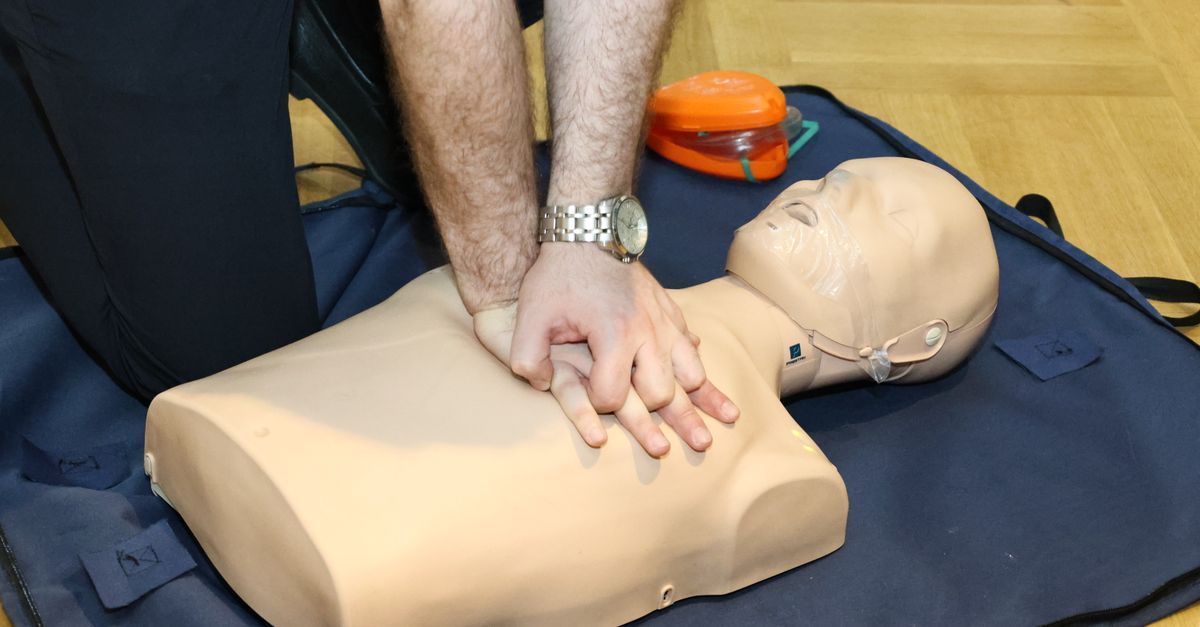
An AED is designed to be usable by someone with no training at all, since modern units talk a rescuer through every step. That said, staff who've completed proper CPR and AED training respond with far more confidence and speed than someone encountering the device for the first time during a genuine emergency. Combining a well-placed, well-maintained AED with a reasonable number of trained responders across your shifts gives you the strongest possible position if the worst happens.
Have you checked recently whether your current responder numbers and AED coverage actually match how your building is used day to day, including evenings, weekends or split shifts?
Getting the placement, maintenance and training side of this right isn't a one-off task to tick off and forget. It's worth revisiting every time your layout changes, staff numbers grow, or it's simply been a while since anyone checked the cabinet.
Want help reviewing your current AED setup or booking CPR and AED training for your team? Get in touch through our contact page, or call us directly on 086 202 4504 or email info@handlewithcare.ie to arrange a visit.