

Why Slips, Trips and Falls at Work Increase in Winter
Slips, trips and falls at work become far more common during the winter months across Ireland, when wet floors, icy yards and shorter daylight hours combine to catch employees off guard. Preventing these incidents means tackling housekeeping, footwear, lighting and manual handling together, while making sure staff know how to respond quickly if a colleague is hurt.
In this article we look at why winter conditions raise the risk of falls, who is most exposed, and the practical steps employers can take to reduce that risk. We also cover why manual handling training and first aid cover matter just as much as gritting the car park, so your team is never caught without a plan when the weather turns.
Common Winter Workplace Hazards That Lead to Falls
Most winter incidents are not caused by one dramatic event but by a build-up of small, everyday hazards. A wet entrance mat, a dim loading bay or a trailing extension cable can each seem minor, but together they create the conditions for a serious fall. Employers who understand these patterns are in a far better position to prevent them before someone is hurt.
- Frost or ice on car parks, steps, yards and delivery areas
- Rainwater tracked in from outside, especially near entrances and canteens
- Reduced natural light in the early morning and late afternoon
- Extra stock, decorations or cabling around the busy run-up to Christmas
- Rushed deliveries and tighter deadlines that encourage staff to cut corners
- Vehicle yards and loading bays where diesel, rain and frost combine on hard surfaces
Businesses based in Dublin and across the wider Lucan area will know how quickly a cold, damp morning can turn a yard or loading bay into a hazard. The same applies nationally: warehouses, construction sites, retail units and healthcare settings right across Ireland all see a seasonal rise in slip, trip and fall incidents once the weather turns, and the pattern tends to repeat every year from November through to February.
Who Is Most at Risk During the Winter Months
Not every role carries the same level of risk, but very few workplaces are entirely unaffected once the weather turns. Outdoor and site-based staff are the most obvious group, but office and retail teams face real hazards too, just in different areas of the building.
Construction and groundworks staff deal with mud, frost and uneven surfaces on top of their usual manual handling tasks. Delivery drivers and warehouse teams move between cold yards and indoor floors dozens of times a day, often carrying loads while doing so. Healthcare and care staff frequently walk between buildings or car parks in the dark, sometimes supporting a patient or resident at the same time. Retail and hospitality teams face their own pressure points too, with busier footfall, wet floors from customers coming in out of the rain, and extra stock to move during the Christmas trading period.
Recognising which parts of your business carry the highest winter risk makes it much easier to target training, equipment and housekeeping where they will have the biggest effect on workplace accident prevention.
Steps Employers Can Take to Reduce Fall Risks
A short, practical winter plan goes a long way. None of the steps below require major investment, but they do require consistency, because a single missed morning of gritting or a blocked walkway is often enough to cause an injury.
- Grit or salt external walkways, steps and car parks before staff and visitors arrive
- Put out clear wet floor signage at entrances during and after rain
- Check lighting in corridors, stairwells and yards as daylight hours shorten
- Remind staff that suitable, flat, grippy footwear matters more in winter conditions
- Keep walkways clear of stock, cables, decorations and delivery pallets
- Review your workplace first aid risk assessment to reflect seasonal hazards
Many employers find it useful to revisit their workplace first aid risk assessment each autumn, so that winter-specific hazards like ice and reduced lighting are properly recorded rather than assumed. It is also worth keeping a simple log of any near-misses reported by staff, since these small warnings often point to the exact spot where a more serious fall is waiting to happen.
Why Manual Handling Matters in Winter Conditions
Lifting and carrying become noticeably riskier once floors are wet or icy. A load that would normally be straightforward to move can quickly lead to a slip, a dropped item or a strain if the surface underfoot is unstable. This is exactly the kind of situation that good manual handling training is designed to cover.
Our on-site manual handling training is delivered at your premises for businesses right across Ireland, helping staff recognise unsafe conditions, adjust their technique and reduce injury risk, including the extra challenges that winter brings. Training staff to pause and reassess a lift when ground conditions are poor, rather than rushing to keep pace with a busy delivery schedule, is a small habit that prevents a lot of avoidable injuries.
This is particularly relevant for warehouse, logistics, construction and healthcare teams, where manual handling is part of daily work and winter conditions make it noticeably harder to do safely. It is just as relevant in the weeks before Christmas, when order volumes rise and staff are often under more pressure to move quickly.
First Aid for Workplace Falls and Injuries
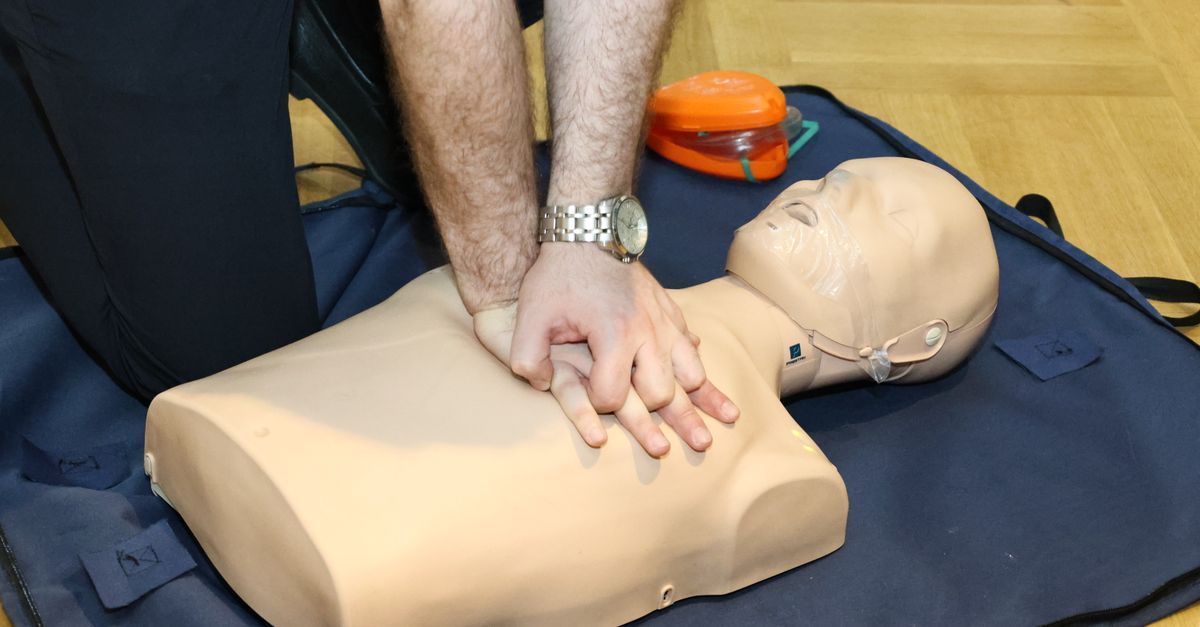
Even with good prevention measures in place, falls still happen, so having trained first aiders on site matters. A sprained ankle, a bumped head or a more serious injury all need a calm, competent response, and that only comes from proper training rather than guesswork.
Our basic first aid training covers exactly this kind of everyday workplace incident, giving staff the confidence to assess an injury, provide initial care, decide whether emergency services are needed and record what happened. First aid kits should also be positioned close to the areas where falls are most likely, such as yards, stairwells and loading bays, rather than tucked away in a single office at the far end of the building.
It is worth checking your current arrangements against our article on common workplace first aid mistakes, since poor responder cover and out-of-date training are two of the issues that most often leave employers exposed after a winter fall. For broader guidance on preparing your workplace for the colder months, the Health and Safety Authority's winter readiness guidance is a useful reference point alongside your own risk assessment and training plans.
Key Takeaway on Slips, Trips and Falls at Work
Slips, trips and falls at work rise sharply every winter, but most of the resulting injuries are preventable with good housekeeping, sensible footwear, proper lighting and staff who are trained to handle loads and respond to injuries safely. Businesses across Ireland that plan ahead each autumn consistently see fewer winter incidents than those who wait until the first icy morning to react.
If you would like to book on-site manual handling or first aid training for your team ahead of winter, get in touch with our team. You can reach us on 086 202 4504 or by email at info@handlewithcare.ie, and we will help you put the right cover in place before the cold weather sets in.

Why Slips, Trips and Falls at Work Increase in Winter
Slips, trips and falls at work become far more common during the winter months across Ireland, when wet floors, icy yards and shorter daylight hours combine to catch employees off guard. Preventing these incidents means tackling housekeeping, footwear, lighting and manual handling together, while making sure staff know how to respond quickly if a colleague is hurt.
In this article we look at why winter conditions raise the risk of falls, who is most exposed, and the practical steps employers can take to reduce that risk. We also cover why manual handling training and first aid cover matter just as much as gritting the car park, so your team is never caught without a plan when the weather turns.
Common Winter Workplace Hazards That Lead to Falls
Most winter incidents are not caused by one dramatic event but by a build-up of small, everyday hazards. A wet entrance mat, a dim loading bay or a trailing extension cable can each seem minor, but together they create the conditions for a serious fall. Employers who understand these patterns are in a far better position to prevent them before someone is hurt.
- Frost or ice on car parks, steps, yards and delivery areas
- Rainwater tracked in from outside, especially near entrances and canteens
- Reduced natural light in the early morning and late afternoon
- Extra stock, decorations or cabling around the busy run-up to Christmas
- Rushed deliveries and tighter deadlines that encourage staff to cut corners
- Vehicle yards and loading bays where diesel, rain and frost combine on hard surfaces
Businesses based in Dublin and across the wider Lucan area will know how quickly a cold, damp morning can turn a yard or loading bay into a hazard. The same applies nationally: warehouses, construction sites, retail units and healthcare settings right across Ireland all see a seasonal rise in slip, trip and fall incidents once the weather turns, and the pattern tends to repeat every year from November through to February.
Who Is Most at Risk During the Winter Months
Not every role carries the same level of risk, but very few workplaces are entirely unaffected once the weather turns. Outdoor and site-based staff are the most obvious group, but office and retail teams face real hazards too, just in different areas of the building.
Construction and groundworks staff deal with mud, frost and uneven surfaces on top of their usual manual handling tasks. Delivery drivers and warehouse teams move between cold yards and indoor floors dozens of times a day, often carrying loads while doing so. Healthcare and care staff frequently walk between buildings or car parks in the dark, sometimes supporting a patient or resident at the same time. Retail and hospitality teams face their own pressure points too, with busier footfall, wet floors from customers coming in out of the rain, and extra stock to move during the Christmas trading period.
Recognising which parts of your business carry the highest winter risk makes it much easier to target training, equipment and housekeeping where they will have the biggest effect on workplace accident prevention.
Steps Employers Can Take to Reduce Fall Risks
A short, practical winter plan goes a long way. None of the steps below require major investment, but they do require consistency, because a single missed morning of gritting or a blocked walkway is often enough to cause an injury.
- Grit or salt external walkways, steps and car parks before staff and visitors arrive
- Put out clear wet floor signage at entrances during and after rain
- Check lighting in corridors, stairwells and yards as daylight hours shorten
- Remind staff that suitable, flat, grippy footwear matters more in winter conditions
- Keep walkways clear of stock, cables, decorations and delivery pallets
- Review your workplace first aid risk assessment to reflect seasonal hazards
Many employers find it useful to revisit their workplace first aid risk assessment each autumn, so that winter-specific hazards like ice and reduced lighting are properly recorded rather than assumed. It is also worth keeping a simple log of any near-misses reported by staff, since these small warnings often point to the exact spot where a more serious fall is waiting to happen.
Why Manual Handling Matters in Winter Conditions
Lifting and carrying become noticeably riskier once floors are wet or icy. A load that would normally be straightforward to move can quickly lead to a slip, a dropped item or a strain if the surface underfoot is unstable. This is exactly the kind of situation that good manual handling training is designed to cover.
Our on-site manual handling training is delivered at your premises for businesses right across Ireland, helping staff recognise unsafe conditions, adjust their technique and reduce injury risk, including the extra challenges that winter brings. Training staff to pause and reassess a lift when ground conditions are poor, rather than rushing to keep pace with a busy delivery schedule, is a small habit that prevents a lot of avoidable injuries.
This is particularly relevant for warehouse, logistics, construction and healthcare teams, where manual handling is part of daily work and winter conditions make it noticeably harder to do safely. It is just as relevant in the weeks before Christmas, when order volumes rise and staff are often under more pressure to move quickly.
First Aid for Workplace Falls and Injuries
Even with good prevention measures in place, falls still happen, so having trained first aiders on site matters. A sprained ankle, a bumped head or a more serious injury all need a calm, competent response, and that only comes from proper training rather than guesswork.
Our basic first aid training covers exactly this kind of everyday workplace incident, giving staff the confidence to assess an injury, provide initial care, decide whether emergency services are needed and record what happened. First aid kits should also be positioned close to the areas where falls are most likely, such as yards, stairwells and loading bays, rather than tucked away in a single office at the far end of the building.
It is worth checking your current arrangements against our article on common workplace first aid mistakes, since poor responder cover and out-of-date training are two of the issues that most often leave employers exposed after a winter fall. For broader guidance on preparing your workplace for the colder months, the Health and Safety Authority's winter readiness guidance is a useful reference point alongside your own risk assessment and training plans.
Key Takeaway on Slips, Trips and Falls at Work
Slips, trips and falls at work rise sharply every winter, but most of the resulting injuries are preventable with good housekeeping, sensible footwear, proper lighting and staff who are trained to handle loads and respond to injuries safely. Businesses across Ireland that plan ahead each autumn consistently see fewer winter incidents than those who wait until the first icy morning to react.
If you would like to book on-site manual handling or first aid training for your team ahead of winter, get in touch with our team. You can reach us on 086 202 4504 or by email at info@handlewithcare.ie, and we will help you put the right cover in place before the cold weather sets in.